

• Bowser Hyundai of Pleasant Hills

Blog / Service

Hyundai Winter Tires vs. All-Season Tires: What Drivers Should Know

Snowy tires

Hyundai Winter Tires vs. All-Season Tires: Which Is Right for Pittsburgh Drivers?

When winter arrives in Western Pennsylvania, drivers face a familiar combination of freezing temperatures, snow-covered roads, icy hills, and unpredictable weather. Whether you're commuting through Pittsburgh, driving around Pleasant Hills, or traveling along the area's highways and back roads, having the right tires can make a significant difference in your vehicle's winter performance.

One of the most common questions Hyundai owners ask is: Are winter tires better than all-season tires for Pennsylvania winters? The answer depends on your driving habits, local weather conditions, and the type of roads you travel most often. Winter tires are specifically designed to provide improved traction in cold temperatures, snow, and ice. All-season tires offer year-round versatility and can be a practical option for drivers who encounter moderate winter conditions.

At Bowser Hyundai in Pleasant Hills, we want local drivers to understand the differences between winter tires and all-season tires so they can make an informed decision about their Hyundai's tire needs.


What Is the Difference Between Winter Tires and All-Season Tires?

The biggest difference between winter tires and all-season tires is how their rubber compounds and tread designs perform in cold weather. Winter tires are engineered specifically for cold temperatures and winter road conditions. All-season tires are designed to provide balanced performance across a broader range of weather conditions throughout the year.

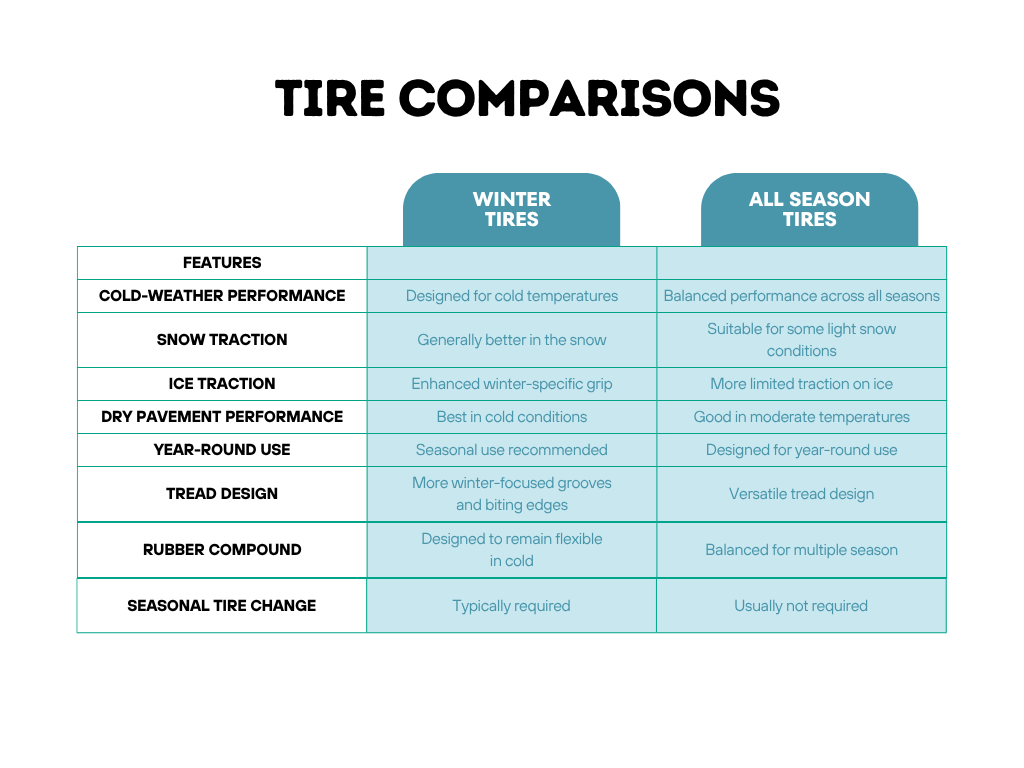
Here's a quick comparison:


Winter vs All Season Tire Comparison Chart

For drivers who regularly encounter snow, ice, and prolonged freezing temperatures, winter tires may offer advantages over traditional all-season tires.


1. How Do Winter Tires Perform in Pennsylvania Snow and Ice?

Winter tires are designed to provide additional traction in cold-weather driving conditions.Their specialized rubber compounds are intended to remain more flexible in lower temperatures, while their tread patterns include features that help grip snow and slippery surfaces.


Benefits of winter tires for Hyundai drivers

  • Improved traction in snow-covered conditions
  • Enhanced grip during cold-weather driving
  • Better performance in certain icy and slushy conditions
  • Increased confidence when navigating winter roads

For drivers who regularly travel on steep hills, rural roads, or roads that may not be cleared immediately after snowfall, winter tires may be worth considering. However, winter tires do not eliminate the risk of sliding on ice. Drivers should still reduce speed, increase following distance, and avoid sudden braking or acceleration.


Are winter tires worth it in Pittsburgh?

Winter tires may be a worthwhile investment for Pittsburgh-area drivers who frequently encounter heavy snowfall, freezing temperatures, and icy roads. If your daily commute includes hilly neighborhoods, less-maintained roads, or frequent early-morning travel during winter weather, dedicated winter tires may provide useful additional traction.
Drivers who primarily travel on cleared roads and encounter only occasional snow may find that quality all-season tires meet their needs.


2. Are All-Season Tires Good for Western Pennsylvania Winters?

All-season tires are designed to provide balanced performance in dry, wet, and some winter conditions.
Many Hyundai models come equipped with all-season tires from the factory, depending on the model, trim, and configuration. For drivers who experience moderate winter weather, all-season tires can offer a convenient option because they do not typically require seasonal replacement.


Advantages of all-season tires

  • Convenient year-round use
  • Balanced performance in dry and wet conditions
  • Suitable for many moderate winter driving situations
  • No routine seasonal tire swap required
  • Potentially lower seasonal maintenance costs

However, all-season tires are not specifically engineered for severe snow and ice. When temperatures drop and roads become snow-covered or icy, their traction may be more limited than that of dedicated winter tires.


Can all-season tires handle Pittsburgh snow?

All-season tires can handle some snowy conditions, but their performance depends on the tire's design, tread depth, temperature, and road surface. For drivers in Pittsburgh and Pleasant Hills, all-season tires may be adequate for moderate winter driving. If your commute frequently includes heavy snow or icy roads, winter tires may provide additional traction. It's also important to distinguish all-season tires from all-weather tires. Some all-weather tires carry the Three-Peak Mountain Snowflake (3PMSF) symbol, indicating that they meet a specific severe-snow traction performance standard. This can be a useful consideration for drivers seeking year-round tires with enhanced winter capability.


3. Do Hyundai All-Wheel Drive Vehicles Still Need Winter Tires?

One of the most common misconceptions about winter driving is that all-wheel drive eliminates the need for winter tires. While available Hyundai HTRAC All-Wheel Drive can help improve traction when accelerating on slippery surfaces, it does not provide the same winter-specific grip as dedicated winter tires.


Why tires still matter with all-wheel drive

All-wheel drive helps distribute engine power to the wheels. However, your tires are still responsible for gripping the road when you brake, turn, and accelerate. Even a Hyundai Tucson AWD, Santa Fe AWD, or Palisade AWD can experience reduced traction on snow or ice if its tires are not suited to the conditions. Winter tires can help optimize traction for vehicles equipped with all-wheel drive.

Important: If you choose winter tires, Hyundai's tire specifications and vehicle guidance should be followed. Generally, a complete set of four matching winter tires is recommended to maintain balanced handling. Do not install winter tires on only one axle without confirming the vehicle manufacturer's guidance.


4. When Should You Switch to Winter Tires in Pennsylvania?

Many tire manufacturers recommend considering winter tires when temperatures consistently fall below approximately 45°F (7°C), although the best timing depends on your local weather and tire type. For drivers in Pleasant Hills and the greater Pittsburgh area, fall is often a good time to evaluate tire needs before the first major snowfall.


Signs it may be time for winter tires

  • Temperatures regularly remain below 45°F.
  • Your commute frequently includes snow-covered roads.
  • You drive on steep or rural roads during winter.
  • Your current tires have limited tread remaining.
  • You want additional winter traction for your driving conditions.

Winter tires should generally be removed when warmer spring temperatures return. Their softer compounds can wear more quickly on warm pavement. Planning your seasonal tire change in advance can help you avoid the rush that often occurs before the first major winter storm.


5. What Should Hyundai Drivers Know About Winter Tire Maintenance?

Whether you choose winter tires or all-season tires, proper tire maintenance is essential for winter driving performance. Before winter begins, have your tires inspected for:

Tread depth: Adequate tread helps tires maintain traction on wet and snowy roads. Replace tires when they reach the applicable wear limits.
Tire pressure: Cold temperatures can cause tire pressure to decrease. Check your pressure when the tires are cold and follow the recommended PSI on your Hyundai's driver's door-jam label.
Uneven wear: Uneven tread wear may indicate alignment, suspension, or tire maintenance concerns.
Tire condition: Look for cracks, bulges, punctures, or other visible damage.
Tire compatibility: Always use the correct tire size, load rating, and specifications recommended for your Hyundai.
Routine tire rotations, balancing, and alignment checks can also help maintain tire performance and longevity.


6. Which Hyundai Models Can Benefit from Winter Tires?

Winter tire needs depend on your vehicle, tire configuration, and driving conditions. Many Hyundai models can benefit from winter tires when used in areas with significant snow and cold temperatures.

Examples include:
  • Hyundai Tucson: Winter tires may provide added traction for SUV drivers navigating snowy commutes and hilly roads.
  • Hyundai Santa Fe: Appropriate winter tires can help support traction and handling in cold-weather conditions.
  • Hyundai Palisade: Winter tire options may be beneficial for drivers who frequently encounter snow or ice.
  • Hyundai Elantra: Winter tires can provide additional cold-weather traction for drivers of Hyundai sedans.
  • Hyundai Sonata: Winter tire options may be useful for drivers who regularly travel on snow-covered roads.

The correct tire size and specifications vary by model year, trim, and equipment. Always verify compatibility before purchasing tires.


Frequently Asked Questions: Hyundai Winter Tires vs. All-Season Tires


Are winter tires better than all-season tires in snow?

Yes. Dedicated winter tires generally provide better traction in snow and cold-weather conditions than conventional all-season tires. Their specialized rubber compounds and tread designs are engineered for winter performance.


Do I need winter tires for my Hyundai in Pittsburgh?

Winter tires are not necessary for every Pittsburgh-area driver, but they may be beneficial if you frequently encounter snow, ice, and prolonged freezing temperatures. Your commute, road conditions, and current tire condition should guide your decision.


Can I use all-season tires on my Hyundai during winter?

Yes. All-season tires are designed for year-round use and can provide adequate performance in many moderate winter conditions. However, they generally offer less traction than dedicated winter tires in severe snow and ice.


Are winter tires worth the cost in Pennsylvania?

Winter tires may be worth the investment for drivers who regularly encounter challenging winter road conditions. They can provide improved traction in cold temperatures, snow, and ice. The value depends on your driving habits, seasonal conditions, and tire maintenance needs.


Does HTRAC All-Wheel Drive replace winter tires?

No. HTRAC All-Wheel Drive can help improve traction during acceleration, but it does not replace the winter-specific traction of dedicated winter tires. All-wheel drive does not eliminate the need for appropriate tires or safe driving practices.


What is the difference between all-season and all-weather tires?

All-season tires are designed for balanced year-round performance, including some light snow. All-weather tires are also designed for year-round use but may offer enhanced winter capability. Some all-weather tires carry the Three-Peak Mountain Snowflake symbol, indicating they meet a severe-snow traction standard.


Where can I get Hyundai tire service in Pleasant Hills, PA?

Bowser Hyundai in Pleasant Hills can help drivers review their Hyundai's tire needs, including tire inspections, tire maintenance, and seasonal tire considerations. Contact our service team to discuss your vehicle's specifications and available service options.


Find the Right Tires for Your Hyundai at Bowser Hyundai Pleasant Hills

Choosing between winter tires and all-season tires depends on your driving habits, local weather, and the road conditions you encounter throughout the winter. For drivers in Pleasant Hills and the greater Pittsburgh area, understanding the differences between winter tires and all-season tires can help you make an informed decision about your Hyundai's winter performance. Whether you drive a Hyundai Tucson, Santa Fe, Palisade, Elantra, Sonata, or another Hyundai model, the team at Bowser Hyundai Pleasant Hills can help you review your tire needs and prepare for the colder months ahead. Ready to prepare your Hyundai for winter?

Contact Bowser Hyundai Pleasant Hills to learn more about tire service, seasonal tire options, and winter maintenance recommendations for your vehicle.

The Power of Bowser. Helping Pittsburgh-area drivers feel confident on the road, all year long.
Posted in:

Related Posts

2026 Hyundai Palisade Winter

How to Prepare Your Hyundai for a Western PA Winter: A Complete Winter Maintenance Guide

Western Pennsylvania winters can bring freezing temperatures, heavy snowfall, icy roads, and rapidly changing driving conditions. If you drive a Hyundai in Pittsburgh, Pleasant Hills, Chippewa, or the surrounding areas, preparing your vehicle for winter is an important part of keeping it dependable throughout the colder months. The best way to prepare your Hyundai for a Western PA winter is to inspect your tires, test your battery, check your brakes and fluids, replace worn windshield wipers, and prepare an emergency kit before the first major snowfall. At Bowser Hyundai, we help drivers prepare for the unique challenges of Pennsylvania winters. Whether you drive a Hyundai Tucson, Santa Fe, Palisade, Elantra, Sonata, or another Hyundai model, this winter car maintenance checklist can help you understand what to check before temperatures drop. 7 Essential Hyundai Winter Maintenance Tips Use this checklist to prepare your Hyundai for cold temperatures, snow, ice and winter driving around Pittsburgh. Inspect tire tread depth, pressure and overall condition. Test your car battery before freezing temperatures arrive. Check your brakes and essential vehicle fluids. Replace worn windshield wipers and use winter-rated washer fluid. Test your heater, defrosters and exterior lights. Review your Hyundai's all-wheel drive and winter driving features. Pack a winter emergency kit and check road conditions before traveling. 1. Check Your Hyundai Tires for Snow and Ice Your tires are your vehicle's primary point of contact with the road, making them one of the most important components to inspect before winter. In Western Pennsylvania, snow, freezing rain, slush, and icy hills can make everyday commutes more challenging. Proper tire maintenance helps your Hyundai maintain traction and handle changing road conditions. Before winter arrives, check the following: Tire tread depth: Worn tires can have difficulty gripping snow-covered and wet roads. Replace tires when they reach the applicable wear limits. Tire pressure: Cold weather causes tire pressure to decrease. Check your tires when they are cold and inflate them to the recommended pressure on the driver's door-jamb label. Uneven tire wear: Uneven wear may indicate alignment, suspension, or tire maintenance issues. Winter tire options: Dedicated winter tires can provide additional traction in sustained cold temperatures and snowy conditions. Is all-wheel drive necessary for Pennsylvania winters? All-wheel drive can be helpful when accelerating on slippery roads, steep driveways, and snow-covered streets. Many Hyundai SUVs offer available HTRAC All-Wheel Drive, depending on the model and trim. However, all-wheel drive does not eliminate the risk of skidding or reduce braking distances on ice. Proper tires, safe speeds, and adequate following distances remain essential. Local winter tip: If your daily commute includes steep Pittsburgh-area hills or rural roads that may not be cleared immediately after snowfall, have your tires inspected before winter weather begins. 2. Test Your Hyundai Battery Before Temperatures Drop A weak battery can become a major problem during a Pennsylvania cold snap. Low temperatures reduce a battery's ability to deliver power, making it harder to start your vehicle when you need it most. If your Hyundai's battery is aging, a pre-winter battery test can help identify potential problems before you are left with a vehicle that will not start. Watch for these common warning signs: Your engine cranks more slowly than usual. Interior lights or headlights appear dimmer than normal. You experience intermittent starting problems. Your battery is several years old or has previously required a jump-start. Battery life varies based on driving habits, climate, and vehicle use. Rather than relying on age alone, have a qualified technician test the battery's condition and starting performance. If your Hyundai needs a replacement battery, confirm the correct specification for your model. 3. Inspect Your Hyundai Brakes and Fluids Winter driving often requires more cautious braking and can expose existing vehicle maintenance issues. Before the first snowfall, make sure your brakes and essential fluids are in good condition. What fluids should you check before winter? Engine oil: Follow your Hyundai owner's manual for the recommended oil type and service interval. Using the correct oil is especially important for reliable cold-weather operation. Engine coolant: Coolant helps regulate engine temperature and protects against freezing. Have its condition and freeze protection checked according to your Hyundai's maintenance recommendations. Windshield washer fluid: Use a winter-rated washer fluid that is suitable for freezing temperatures. Summer washer fluid can freeze and limit visibility. Brake fluid: Brake fluid should be maintained according to your vehicle's service schedule. Have it inspected if service is due or if you notice changes in braking performance. How do you know if your Hyundai needs brake service? Warning signs include squealing or grinding noises, vibration when braking, or a noticeable change in pedal feel or stopping performance. If you notice these symptoms, schedule an inspection rather than waiting for winter conditions to make the problem more difficult to manage. 4. Replace Windshield Wipers and Check Your Defrosters Snow is not the only visibility challenge drivers face during a Western PA winter. Road salt, slush, freezing rain, and spray from other vehicles can quickly cover your windshield. Before winter begins, inspect your windshield wipers and make sure your defrosters work properly. Your winter visibility checklist should include: Replacing wiper blades that streak, chatter, or leave uncleared areas. Filling the washer reservoir with winter-rated fluid. Testing the front and rear defrosters, if equipped. Checking headlights, brake lights, turn signals, and exterior lights. Cleaning the inside and outside of your windows to reduce glare and fogging. Keep an ice scraper and snow brush in your Hyundai. Before driving, clear snow and ice from your windshield, windows, mirrors, lights, hood, and roof. These simple steps can improve visibility during dark morning commutes and evening drives around Pittsburgh. 5. Prepare Your Hyundai for Cold Starts and Winter Breakdowns Even a properly maintained vehicle can experience problems in severe winter weather. A winter emergency kit helps you prepare for unexpected delays, road closures, or breakdowns. Keep these items in your Hyundai: Ice scraper and snow brush Warm gloves, hats, and extra clothing Blanket Flashlight and spare batteries Phone charger or portable power bank Jumper cables or a compatible jump starter First-aid kit Bottled water and nonperishable snacks Small snow shovel Sand or another suitable traction aid. If you regularly travel with children, pack additional warm clothing and supplies. During extended periods of cold weather, try to keep your fuel tank at least half full. Check the forecast and road conditions before leaving home, especially when snow or freezing rain is expected. Pennsylvania drivers can check 511PA for road conditions, traffic alerts, and travel information. 6. Understand Your Hyundai's Winter Driving Features Depending on the model, trim, and equipment, your Hyundai may include features designed to support cold-weather comfort and driving performance. HTRAC All-Wheel Drive Available on select Hyundai models, HTRAC All-Wheel Drive can distribute power between the front and rear wheels to help improve traction in certain driving conditions. It can be useful when accelerating on slippery roads, but it does not replace winter tires or safe driving practices. Snow Mode and Drive Modes Some Hyundai models offer selectable drive modes, including Snow mode on certain vehicles. These modes may adjust vehicle responses to help manage traction in specific conditions. Available modes and operation vary by model. Consult your owner's manual to understand which features your Hyundai offers and when to use them. Heated Seats and Steering Wheels Depending on your Hyundai's trim and equipment, heated front seats, a heated steering wheel, and heated exterior mirrors can make winter driving more comfortable. Driver Assistance Features Hyundai SmartSense driver assistance technologies vary by model and configuration. These systems may provide additional support in certain situations, but they do not replace attentive driving, clear visibility, or safe following distances. Before winter arrives, familiarize yourself with your Hyundai's available features and check your owner's manual for model-specific instructions. 7. Schedule Hyundai Winter Maintenance Before the First Snowstorm One of the easiest ways to prepare your vehicle for winter is to schedule maintenance before freezing temperatures and heavy snow arrive. A pre-winter inspection can help identify maintenance needs before they become more urgent. Depending on your Hyundai's age, mileage, condition, and service history, your technician may recommend: Tire inspection and pressure adjustment Battery and charging system testing Brake inspection Fluid level and condition checks Windshield wiper replacement Heating and defroster checks Review of upcoming factory-recommended maintenance Not every Hyundai needs the same services at the same time. Your owner's manual and maintenance history should guide which items are due. Drivers looking for Hyundai service in Pleasant Hills, PA, can contact Bowser Hyundai to discuss their vehicle's maintenance needs and available service options. Frequently Asked Questions About Hyundai Winter Maintenance How do I prepare my Hyundai for a Pennsylvania winter? Start by inspecting your tires, testing your battery, checking your brakes and fluids, and replacing worn windshield wipers. Confirm that your heater and defrosters work properly, prepare an emergency kit, and review your Hyundai's recommended maintenance schedule before winter weather arrives. When should I get my Hyundai ready for winter in Pittsburgh? Fall is generally a good time to schedule winter maintenance in the Pittsburgh area, before the first major cold snap or snowfall. This allows time to address worn tires, a weak battery, or other maintenance needs before winter driving becomes more difficult. Does my Hyundai need winter tires in Western Pennsylvania? Winter tires are not necessary for every driver, but they can provide improved traction in cold temperatures and snowy conditions. Your decision should depend on your driving habits, commute, road conditions, and tire type. All-season tires also vary in their winter performance. Is Hyundai HTRAC All-Wheel Drive good for snow? HTRAC All-Wheel Drive, available on select Hyundai models, can help improve traction when accelerating on slippery roads. However, it cannot prevent every loss of traction or eliminate the need for winter-appropriate tires and cautious driving. How often should I check tire pressure in winter? Check your tire pressure regularly, particularly when temperatures change significantly. Use the recommended pressure on your driver's door-jamb label and measure the pressure when the tires are cold. Do not rely solely on the maximum pressure printed on the tire sidewall. Can cold weather affect my Hyundai battery? Yes. Cold temperatures reduce battery performance and can make it more difficult for an aging or weakened battery to start your vehicle. A battery test before winter can help identify potential problems. Where can I get my Hyundai ready for winter near Pittsburgh? Bowser Hyundai serves drivers in the greater Pittsburgh area, including Pleasant Hills and Chippewa. Contact your preferred Bowser Hyundai location to ask about available service appointments and the maintenance recommended for your vehicle. Get Your Hyundai Ready for Winter at Bowser Hyundai Western Pennsylvania winters can be unpredictable, but preparing your Hyundai does not have to be complicated. With the right tires, a healthy battery, properly maintained brakes and fluids, and clear visibility, you can help your vehicle meet the demands of cold-weather driving. Whether you drive a Hyundai Tucson, Santa Fe, Palisade, Elantra, or another model, the team at Bowser Hyundai can help you review your vehicle's maintenance needs before winter arrives. Schedule your Hyundai winter maintenance with Bowser Hyundai today. Visit our Pleasant Hills or Chippewa location to learn more about our service offerings and prepare your vehicle for the season ahead. Bowser Hyundai: Here to help you drive with confidence, all year long.

Spring Vehicle Maintenance for Your Hyundai: Keeping Your Car Ready for the Road

Spring has arrived, and it's time to show some love to your Hyundai after enduring the winter months. Proper maintenance is essential for keeping your vehicle running smoothly, ensuring safety, and saving money on costly repairs down the line. In this blog post, we'll cover essential spring maintenance tasks specifically tailored for Hyundai vehicles. Let's get started! 1. Check and Change the Oil The first step in spring maintenance for your Hyundai is checking and changing the oil. Clean oil is vital for lubricating the engine, reducing friction, and maintaining optimal performance. Over time, oil can become dirty and less effective, so it's crucial to replace it regularly. Tip: Always use the recommended oil grade as specified in your Hyundai owner's manual. Consider using synthetic oil for enhanced engine protection, especially if you frequently drive in challenging conditions. 2. Inspect the Brakes Brakes are a critical safety component in any vehicle, including your Hyundai. Regular inspection for signs of wear, such as squeaking or grinding noises, reduced responsiveness, or uneven braking, is essential. If you notice any issues, it may be time to replace the brake pads, rotors, or even the brake fluid. Tip: Hyundai vehicles often feature advanced braking systems like Electronic Stability Control and Anti-lock Braking System (ABS). Ensure these systems are functioning correctly during your inspection for optimal safety. 3. Check the Battery Cold winter temperatures can weaken your car's battery, affecting its performance and lifespan. Inspect the battery for signs of corrosion, leakage, or damage. Test the battery's voltage and consider replacing it if it's more than three years old or showing signs of weakness. Tip: Hyundai's Battery Management System helps optimize battery usage and lifespan. Make sure this system is activated and functioning correctly to prevent premature battery failure. 4. Inspect the Tires Tire maintenance is crucial for safety, fuel efficiency, and overall performance. Check the tire pressure, tread depth, and overall condition of your Hyundai's tires. Rotate and balance them if necessary, and replace any worn-out tires to ensure optimal handling and traction. Tip: Hyundai vehicles often come equipped with features like Tire Pressure Monitoring System (TPMS) and Electronic Stability Control. Ensure these systems are calibrated correctly and functioning as intended for maximum safety and performance. 5. Check Fluid Levels In addition to oil, your Hyundai relies on various other fluids like coolant, transmission fluid, and windshield washer fluid to operate smoothly. Check these fluid levels regularly and top them off as needed. Inspect for any leaks or contamination that may require further attention. Tip: Hyundai's advanced engine designs and technologies require proper fluid maintenance for optimal performance. Regularly checking and replacing fluids will help your Hyundai run efficiently and last longer. 6. Test the Lights and Wipers Visibility is key to safe driving, so don't overlook the condition and functionality of your Hyundai's lights and windshield wipers. Replace any burnt-out bulbs, cracked lenses, or worn wiper blades to ensure clear visibility in all weather conditions. Tip: Hyundai vehicles often feature advanced lighting systems and rain-sensing wipers. Ensure these systems are calibrated correctly and functioning as intended for maximum safety and convenience. Spring is the ideal time to give your Hyundai the attention it deserves to keep it running smoothly and reliably throughout the year. By following these essential maintenance tips, you can ensure your vehicle is ready for the road ahead, providing you with peace of mind and enjoyable driving experiences all season long. Remember, regular maintenance not only extends the life of your Hyundai but also enhances its performance, safety, and fuel efficiency. Happy driving!